Kovalee
My two years at Kovalee were a crash course in designing for real impact, where business growth and user experience had to move together, not compete. As the sole product designer in my squad, I lived at the intersection of product, growth, and engineering, helping turn promising apps into sustainable businesses.
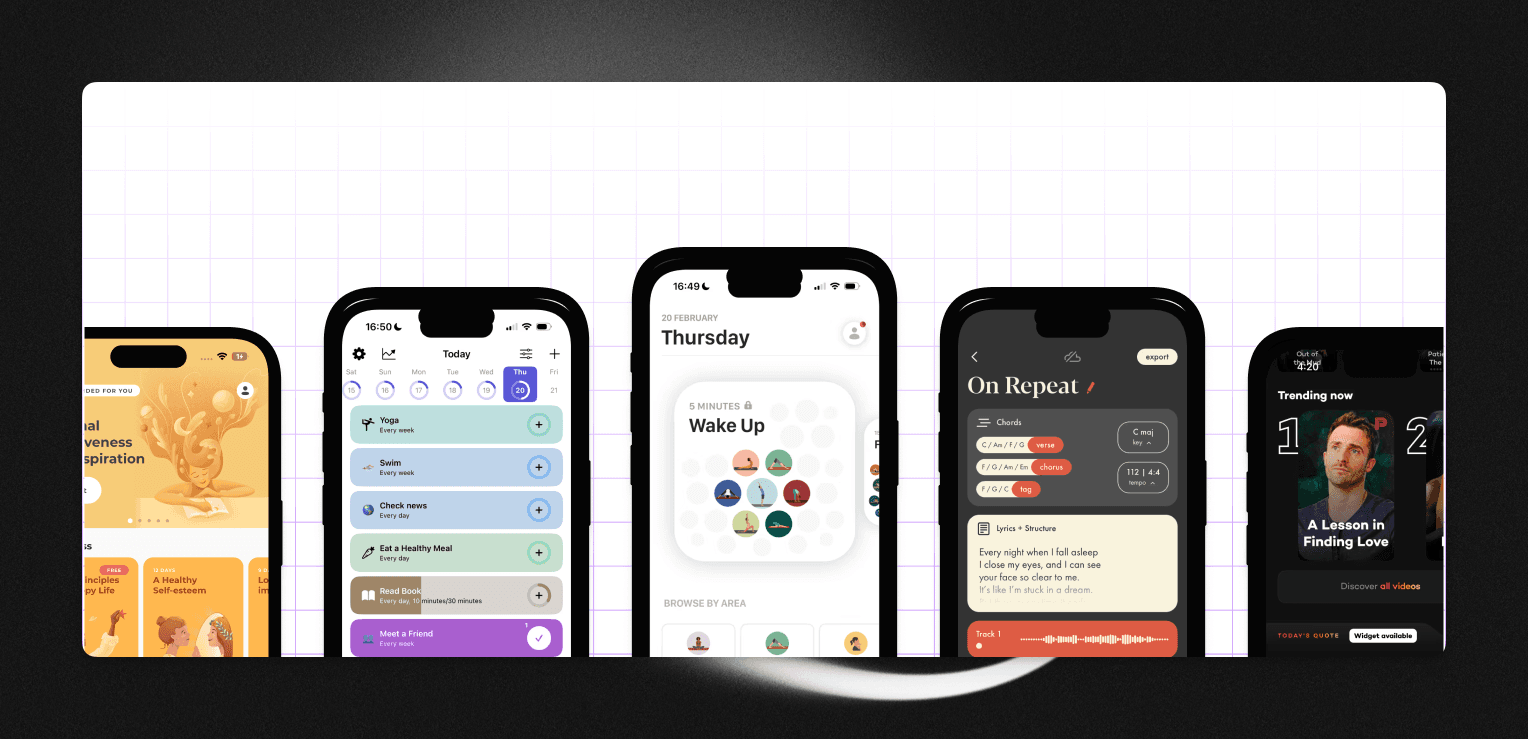
Handful of Kovalee apps I helped shape
Key Impact
- Shipped user experiences across 10+ consumer apps using Kovalee's partner-optimize-scale model
- Built the first design system adopted across 6 internal tools (creative, growth, AI video, UGC)
- Delivered working code for UGC feedback flows that streamlined creative team workflows
- Accelerated design-to-development cycles by prototyping with AI tools (v0, Cursor)
- Drove systematic A/B testing and rapid experimentation, sometimes skipping wireframes to move faster
- Introduced new tools across teams: Rive for animation, Raycast for workflows, Notion for design knowledge
Building for velocity (and for users)
Kovalee's model is simple but ruthless: partner with app teams, give them a runway of a few months, and see if we can make their product profitable. If it works, we scale. If not, we move on. This meant every design decision had to deliver fast.
But it wasn't just about shipping features that convert. I pushed to balance business targets with genuine user insights, using in-app surveys and rapid experiments to keep us honest about what users actually wanted.
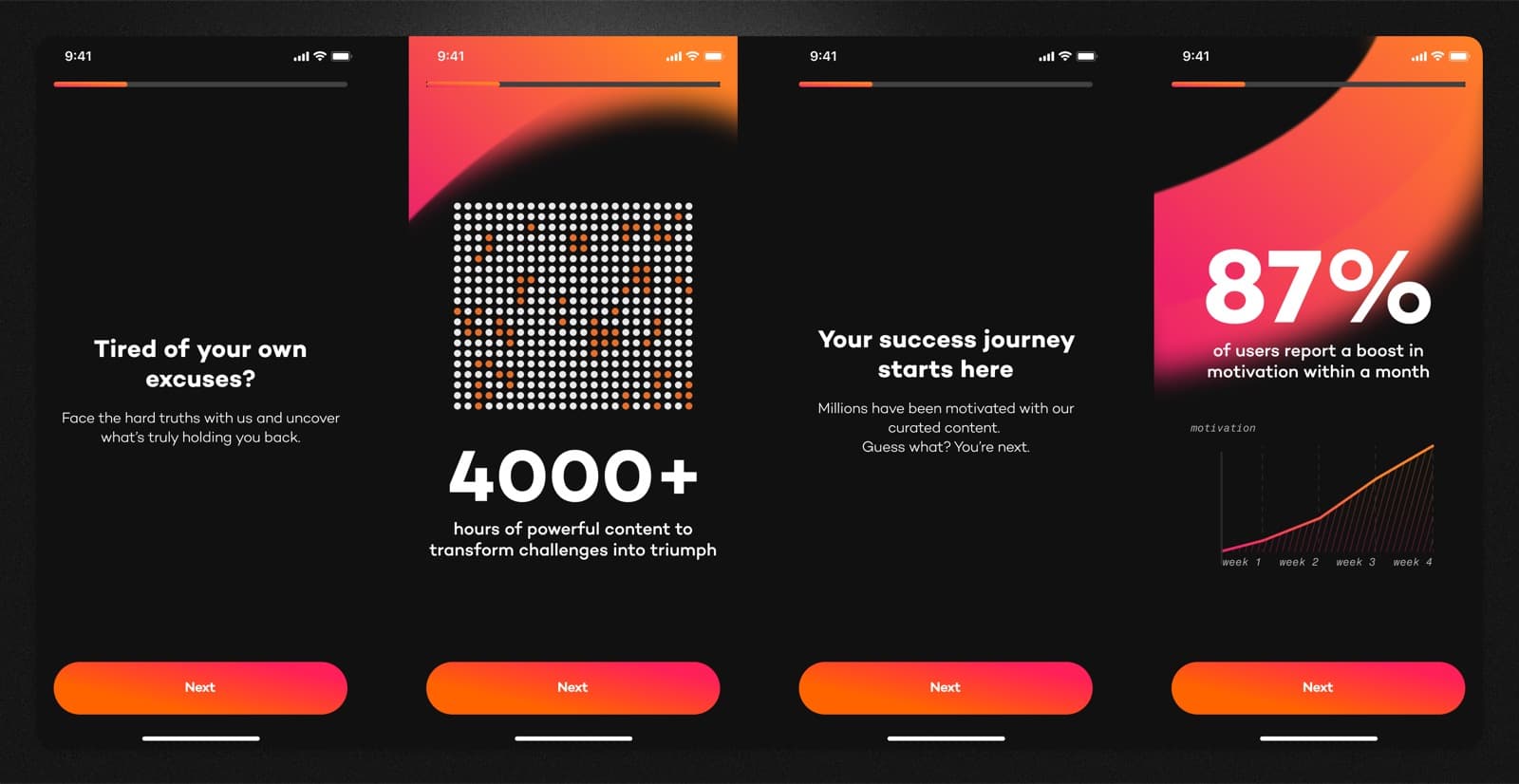
Deliberately blunt onboarding, turns out our users are the "skip the sugarcoating" type
Process: from data to delivery
My day-to-day was a mix of hardcore data analysis and creative iteration. We'd ideate with my PM, sketch out flows, then dive into relentless A/B tests, sometimes skipping wireframes entirely to move faster. As I got to know the dev team, I started jumping straight into UI and even code, leveraging tools like v0 and Cursor to prototype faster.
Some highlights:
- Grit onboarding: We broke the classic "fastest path to checkout" mindset and rebuilt onboarding to build trust before asking for anything: animation to make the app feel alive instead of static, a decision tree that surfaced specific data based on what the user said they were looking for, personalization tied to those answers, and action-based screens before the paywall so it felt like the user was already using the app, not just being sold to. That combination grew onboarding-attributed revenue by 200%.
- PepTalk paywall: Introduced a promo offer, then spent months A/B testing pricing and wording until we landed on a formula that reliably outperformed the original paywall.
- Paywall & Product Process: Early on, I leaned heavily on my PM to interpret analytics, by the end, I was uncovering insights myself. This shift meant we could kick off each week with a clear, shared list of product and UX problems, blending our perspectives for faster, sharper iteration. The result: better communication, more focus, and more impactful solutions.
- Grit again: Featured as "App We Love" by Apple in 22 countries.
- UpLife: Shipped for a wellness app that genuinely helped people.
- Overall: Across the portfolio I worked on, contributed to driving revenue from $90K to $700K/month.
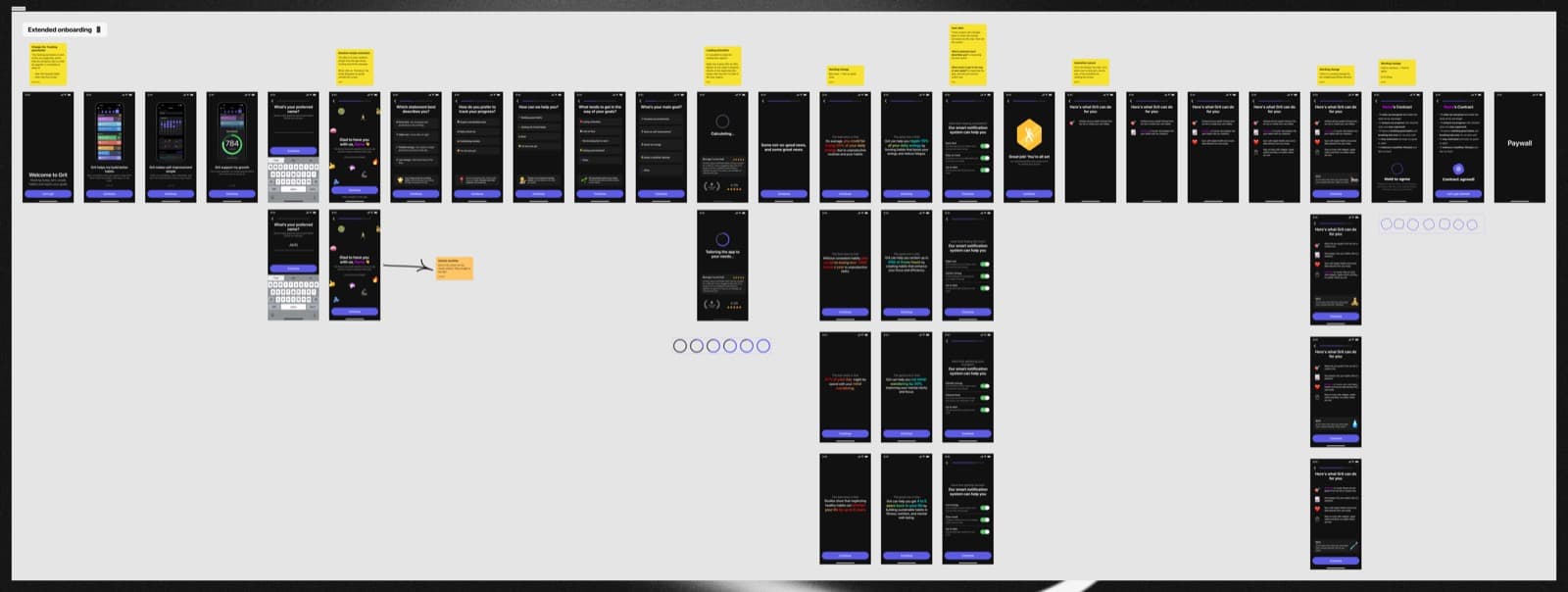
One of many onboarding iterations. Sticky notes > Figma comments for our team, sometimes simple things are the fastest way to include people
Scaling our own tools
Beyond user-facing products, I led redesigns for six internal tools, covering everything from creative and growth to AI video and UGC. This was my playground for system thinking: I kicked off our first design system, ran workshops to surface pain points, and partnered closely with developers to push our tools to the next level. I even started delivering code for custom UI and animation, making sure our internal experience matched the polish of our apps.
Culture: raising the bar for design
I'm always on the hunt for tools that make teams better. At Kovalee, I introduced and taught Rive for animation, advocated for Raycast to speed up workflows, and set up Notion for sharing design knowledge. I helped with hiring, reviewing portfolios, running use-case interviews, and shaping the team's standards. Cross-team rituals were a big part of our rhythm: I loved bringing fresh perspectives from product and A/B testing into growth and creative, helping everyone see the bigger picture and move faster together.